
Two Paths to Serving in Texas
Serving Together
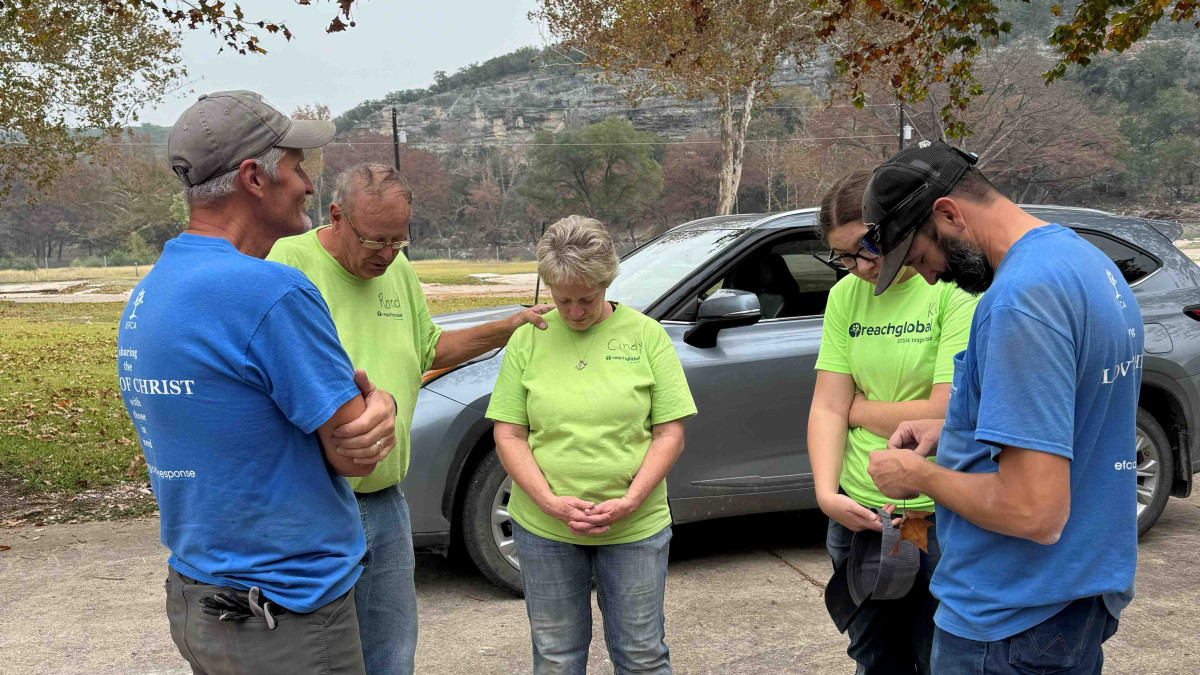
Two men—Mike and Brady—shared how God brought each of them down very different paths to end up serving together in a mission field created by last July's devastating flood of the Texas Hill Country. Their stories reveal both the heartbreak of this tragedy and the powerful ways God works through people who are willing to serve.
How They Found ReachGlobal Crisis Response
For Mike, the ministry connection began years earlier. “I worked as a family pastor at Grace Bible Church in Houston,” he explained. “When Hurricane Harvey hit, Crisis Response partnered with our church, and we got to work alongside them. That was really my first exposure.”
But the moment that drew him directly into the work came later when severe flooding struck the hill country communities of Hunt, Ingram, and Kerrville. “A couple of friends and I drove out to Hunt just days after the flood. Thousands of volunteers were arriving. The very first people we ran into were Mark Lewis and Dan Holman. They invited us to see what Crisis Response was doing and how we might get involved.” That invitation changed everything.
Brady’s journey looked a little different. “My church, River City Community Church in San Antonio, was planning a trip to serve in Hunt. They connected with Crisis Response and asked me to help lead the team.” When Brady met the leadership on site, they saw something in him. “Dan told me he thought I would be a good fit with Crisis Response and asked if I’d consider staying longer after my team left. I agreed—and I kept coming back.”
How the Flood Changed a Community
The disaster that brought them there was sudden and overwhelming. An extraordinary amount of rain fell northwest of Hunt, Texas, sending massive volumes of water rushing through the Guadalupe River canyon.
“The water came down almost like a tsunami,” Mike said. “It rose incredibly fast—some places 30 to 35 feet within an hour.” The flood struck around 3:00 a.m. on the Fourth of July, when most people were asleep. Homes, RVs, vehicles, and livestock were swept away. “The force of the water destroyed everything in its path,” Mike explained. “People were carried away in trailers and homes. Cars were pulled into the river.” By the time the water receded, the tragedy was staggering. Roughly 129 people lost their lives, including 27 young girls and two counselors from Camp Mystic.
Stepping Into the Chaos
When asked how they felt arriving at such a heartbreaking scene, Mike described a strong sense of calling. “This happened in our own backyard,” he said. “As a believer in Christ, I felt like the Lord was telling me to step into the chaos and do whatever was needed.” Brady’s reaction was different—but equally driven. “I don’t always process disasters emotionally,” he admitted. “Maybe it’s my background as a Marine. My instinct is just to get to work. I ask myself, ‘How can I use my experience to do something good here?’”
For Mike, whose background includes counseling, the emotional weight came quickly. “One of the first places I went was a church where the parents of the girls from Camp Mystic were staying. I tried to sit with them and talk with them.” He paused… “There’s no way to fully understand what it’s like to stand with parents whose children have just died. That kind of grief is beyond words.”
Over the months that followed, the work wasn’t only physical—it was spiritual and emotional. “One of the hardest parts has been the theological questions,” Mike shared. “In some tragedies, you can point to an evil act. But here, it was a natural disaster.” People struggled with questions about God, suffering, and loss. “How do we talk about God’s involvement in a broken world?” Mike asked. “Walking through those questions with grieving families has been incredibly challenging.” Yet even amid tragedy, there were moments of hope. “We hear so many stories of people helping each other, heroic acts in the moment, and ways God protected people,” Mike said. “It’s a privilege to hear those stories and walk with people through them.”
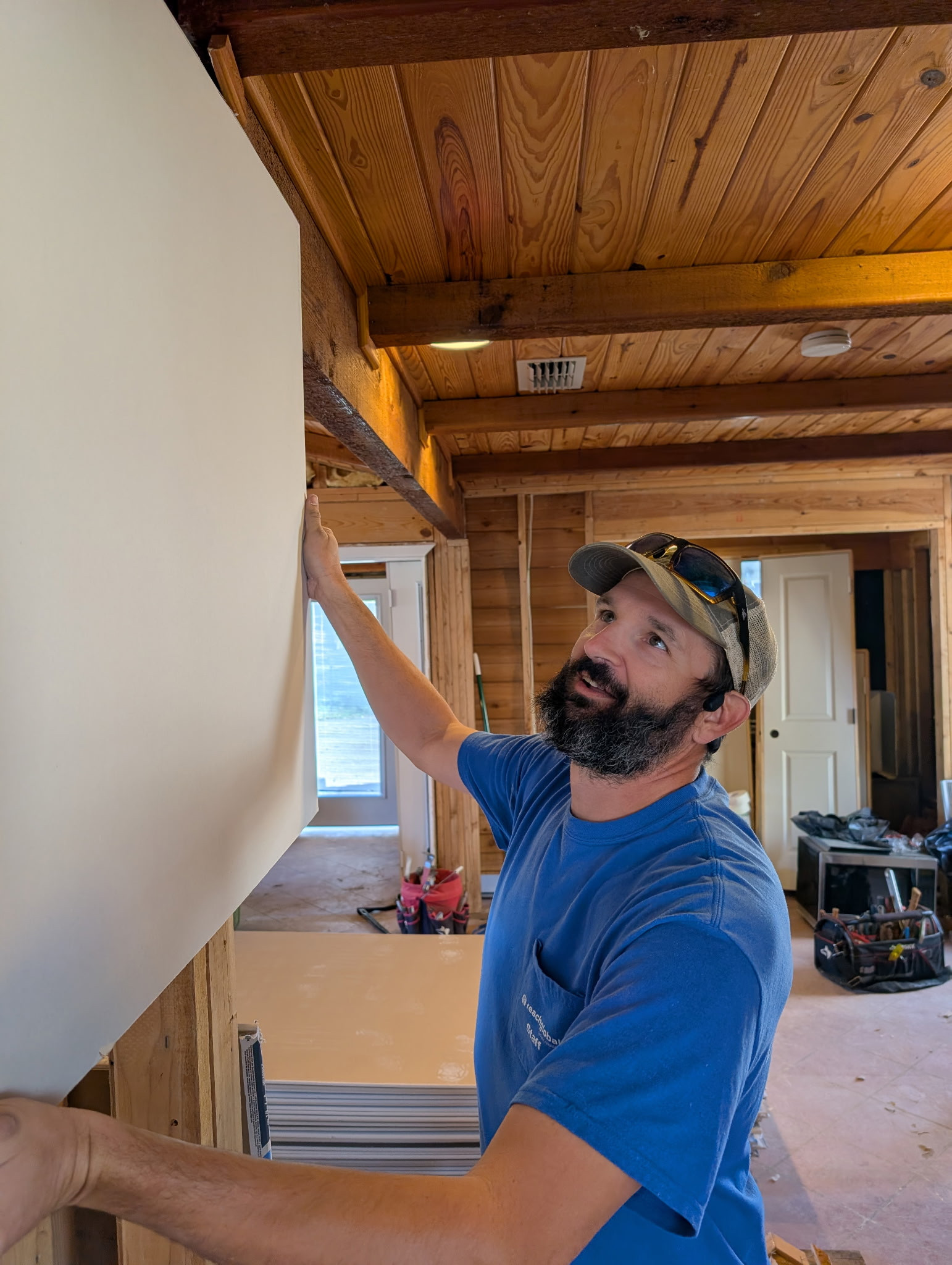
For Brady, the physical work came naturally. His background in construction made rebuilding efforts familiar territory. “The construction part is easy for me,” he said. “But what’s been challenging is learning how to do it within a ministry—leading volunteers instead of subcontractors.”
More importantly, the experience stretched him in unexpected ways. “I thought I was just coming to cut down trees or fix houses,” Brady said. “I didn't have a clue what I was walking into whenever I showed up there. Never dreamed I was going to be a missionary sharing God's love with people.” That relational side of the work changed him. “I used to think I’d go on mission trips just to do the labor and let someone else handle the emotional or spiritual parts,” he said. “But God changed my heart.” Now Brady says he looks forward just as much to the relationships as the rebuilding. “I love the work, but I really miss the community when teams aren’t here.”
What the Texas Team Needs Now
Today, the Crisis Response team in Hunt continues serving the community, but the need for help remains. Mike says expanding the team would make a significant difference. “We’d love to add another construction leader and a few people who could help with administration, hospitality, or logistics.”
Brady agrees—and adds another critical need. “We’ve met hundreds of people in the community,” he said. “Many of them associate Crisis Response with the relationships we started.” But maintaining those connections is difficult while also managing rebuilding projects. “It would be incredible to have someone focused on discipleship—someone who could follow up with homeowners, nurture those relationships, and help people spiritually as they rebuild their lives.”
Volunteer teams are also essential. “Churches from across the country can come serve alongside us,” Brady said. “Not just to rebuild homes, but to be the hands and feet of Jesus.”
Despite the small size of the current team, their impact has been significant. Mike expressed deep gratitude for the people who have committed their lives to the work. “We have a small team doing incredible work,” he said. “People like Brady, Brittany, Brennan, and Allison moved their families here—into a disaster zone—to serve.”
That kind of commitment, he said, is inspiring. “Anyone willing to move their family to a place like this after a tragedy shows tremendous courage. I’m really proud of them.”
The work in Hunt, Texas, continues day by day—through construction projects, counseling conversations, volunteer teams, and quiet prayers. For those involved, the mission is about far more than rebuilding homes. It’s about restoring hope. And in the middle of tragedy, that hope is often found in the simple acts of people who choose to show up, serve, and walk alongside a hurting community.
If you would be interested in leading a team to serve in Texas, email respond@efca.org for more information or to reserve an open week. If God is leading you to take a bigger step and serve as staff in Texas for longer, we would love to talk with you about that. Please join us in praying that God will raise up more workers to bring help and gospel hope in this new mission field.
Send a Response
Share your thoughts with the author.