Finding Compassion at the Border
Two EFCA leaders share their experience visiting El Paso and Ciudad Juarez.
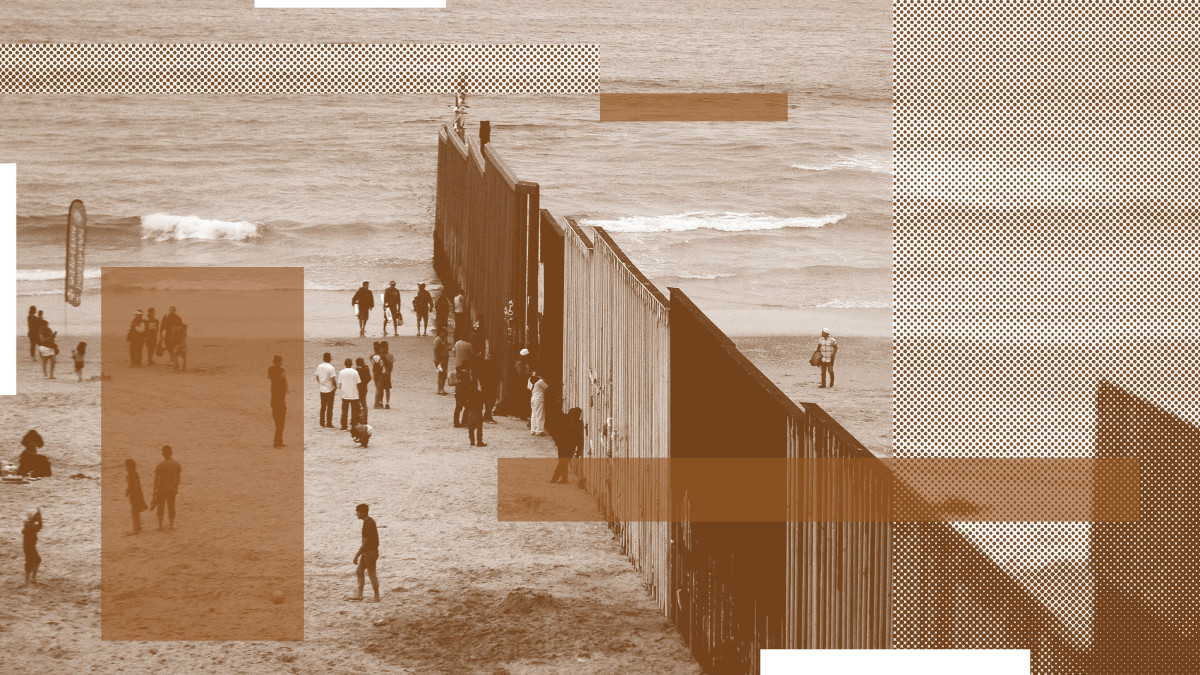
Every year, Immigrant Hope invites EFCA leaders to experience a trip at the El Paso and Ciudad Juarez border to learn about the people on both sides of the U.S.-Mexico border and how U.S. immigration law and global migration trends affect their lives.
Immigrant Hope partners with local churches by providing affordable and trusted legal assistance for immigrants in the United States. This enables EFCA churches with opportunities to care for the least of these while also having open doors to share the gospel. Article 8 of the EFCA Statement of Faith says:
We believe that God's justifying grace must not be separated from His sanctifying power and purpose. God commands us to love Him supremely and others sacrificially, and to live out our faith with care for one another, compassion toward the poor and justice for the oppressed. With God’s Word, the Spirit’s power, and fervent prayer in Christ’s name, we are to combat the spiritual forces of evil. In obedience to Christ’s commission, we are to make disciples among all people, always bearing witness to the gospel in word and deed.
Through Immigrant Hope’s legal services, local churches have a pathway to live out Article 8 by showing compassion to immigrants.
Through Immigrant Hope’s legal services, local churches have a pathway to live out Article 8 by showing compassion to immigrants.
This year, Alex Rivero, co-director to EFCA Hispanic Ministries and executive pastor at The Bridge (EFCA), and Arnie Balber, elder at The Bridge in Newbury Park, California, traveled to the border for clarity and insight on immigration, to experience face-to-face interactions with immigrants at the border and out of a sense for pursuing the Great Commission in Matthew 28:19-20:
“Therefore go and make disciples of all nations...”
Inspired by their own family history of immigration (Alex immigrated from Venezuela and became a U.S. citizen, and Arnie’s parents were holocaust survivors that immigrated to the U.S. in 1948) and a heart for people on the margins, they felt called to explore the situation and obtain a better understanding of the environment and its issues. And to help you better understand the context, Ben Johnson, director of Immigrant Hope, will provide commentary and insight throughout this interview. Here is their conversation.
---
EFCA: What prompted you to travel to the U.S.-Mexico border?
Alex Rivero: I wanted to know more about the current situation. The last time I was there was four years ago. It was a different situation then. I wanted to be sure that I could tell the right information to the churches that I support. That was my main interest.
We all come with our own prejudices and presuppositions––if you're honest with yourself––and it opened me up to seeing what immigration is through an immigrants' eyes.
Arnie Balber: I really bonded with Nueva Vida [the Hispanic congregation at The Bridge] and The Bridge church, but I'm closer with Nueva Vida. I love the people there. I serve with the men from Nueva Vida. I have a real heart for them, and I wanted to go to the border firsthand and see what was really happening.
EFCA: What did you experience while you were there?
Alex: The first day we talked about the roots that cause migration. What are the border realities? One of the things that we appreciated was that a border patrol representative talked to us about the situation from the law enforcement point of view, which is sometimes a different perspective. So we talked about things like immigration law.
Ben Johnson: Many people at the border and who are in the U.S. without documentation qualify for legal status in the U.S. under the law. They do not have status for several reasons: they do not understand exactly how the law applies to them and the procedures required to obtain documentation; they have applied and are waiting for years for the government to process their application; or they have received bad advice from government agents or people posing as immigration experts. Thousands are also being blocked from applying for the status they are entitled to under the law by government policies that limit the number of people who can apply or change the requirements and procedure while people are in process. Immigrant Hope alongside the local church work with immigrants to understand their legal options, file the necessary paperwork and interact with government agencies. Immigrant Hope cannot create legal options for anyone, but we can make sure that they have the knowledge, resources and support to make the best of their legal situation and deal with the consequences. We can help thousands of vulnerable people each year, but hundreds of thousands face the system alone.
The second day we crossed the border to Ciudad Juarez. We learned about how we can tell the story in a dignified way to our churches. We heard stories from the people, and we talked about the reality in Juarez. One of the things that really surprised me is that the shelters in Juarez are run by faith-based communities and churches. That was amazing. The churches took over, and they run the shelters. So we went to a shelter. We played games and sat down at a table with some of the people. There's a shelter of 45 people there. Lots of small kids, including a baby. That was priceless to share a meal with some of them and listen to their stories.
On the third day, we talked more about theology of migration, healing and resilience. We see that the [immigrants]––even though they have suffered––are still there. They want to love each other.
Arnie: You find out what immigration is about, then you get to experience it and then you get to talk about what you experience. It's much more heart tugging and emotional than I ever thought it would be, and it made me look at my own heart and examine it and self-reflect. We all come with our own prejudices and presuppositions––if you're honest with yourself––and it opened me up to seeing what immigration is through an immigrants' eyes. That's what really hit me. To see the faces and see it through their eyes––it’s really moving.
One of the things that really surprised me is that the shelters in Juarez are run by faith-based communities and churches. That was amazing. The churches took over, and they run the shelters.
EFCA: Alex, this is your second time at this experience, what was something new that you learned this time around?
Alex: Sometimes the story concentrates on dehumanizing the situation. But let's talk about the people who are there––they have hopes. They're stuck in the shelters. Let's talk about their story.
Arnie and I ate lunch with a couple men from Central America. They're brothers, and they opened up a little. They spent their whole life trying to get to the United States. I asked one of them, “Have you ever considered going back to your home country?” And they surprised me because they said, “No. Even though we're in a shelter away from our families, trying to find a job in Mexico is way better than how we will be in our own country.” We're thinking: this is bad. Who wants to live in a shelter with a bunch of people you don't know?
Ben Johnson: Most immigrants coming to the southern border have undergone extraordinarily difficult and traumatic journeys. Anyone who has come overland from South America––such as the Venezuelans––has crossed the Darien Gap in Panama, which is one of the most remote and deadly stretches of jungle on earth. The Northern Triangle countries in Central America and northern Mexico are largely lawless and controlled by gangs. Murder, kidnapping, rape and human trafficking are constant risks for anyone traveling through. People know these dangers when they set out on their journeys, often with their children alongside. They do this because even that extreme risk is better than the situations they are leaving behind. There are around 864 million people in the world who go without eating for a day or more at a time. There are many places that are controlled by criminal gangs, militant organizations or totalitarian governments that force people to participate in oppression or face retribution. There are people who cannot see a future where they are that does not involve watching their children starve, or get recruited, abused or kidnapped by violent organizations. They are willing to endure a huge amount of suffering for a chance at a different future.
Arnie: At the shelter, they became like a family within the shelter and cared for each other. I saw joy there. There was a lady who played music, and she sang Venezuelan songs that brought tears to Alex's eyes. I'd never been to shelter before, and it was eye opening for me to see that.
EFCA: As you go to your individual ministries, how do you think that this experience will help you in those spaces? What are you hoping to bring back?
There are people who cannot see a future where they are that does not involve watching their children starve, or get recruited, abused or kidnapped by violent organizations. They are willing to endure a huge amount of suffering for a chance at a different future.
Alex: My main purpose is to open people’s eyes to have a different view. I'm going to continue trying to do that as much as I can. I hope Arnie had a different perspective now so that he can enrich and understand the Hispanic congregation. We want to bring more people from church who would like to have open eyes and open hearts, to listen and go back home and be a community changer.
Arnie: I have much more compassion. I always say we can learn so much from them, because they're more connected as a church and as families. We can learn from that culture, rather than reject it. I would encourage people to have more spiritual eyes, like Jesus.
EFCA: How can the EFCA family pray?
Arnie: Pray that people would have more exposure to what immigrants are going through that are trying to become United States citizens, to become documented, to have more of a compassion for the people that are trying to cross the border.
Alex: My prayer is that churches can continue to make disciples of all nations, and making disciples in America looks different than 50 years ago. The people and communities are changing. If we want to be effective disciplemakers, we have to look at the culture that is changing.
Final Thoughts From Ben Johnson
God is bringing immigrants in need of care and healing to every community. Churches can practice hospitality, meet these people, learn their stories and help them find a spiritual and physical home. Some of them will be long-term community members, while others will choose or be forced to leave. For that second group, local churches have a brief but vital opportunity to introduce them to Jesus and help them grow in their faith. We can bring the loving kindness of God to whatever their situation is and make sure they leave better than they came.
Immigrant Hope can help churches figure out who is in their neighborhood, what needs they have, and how the church can meet those needs.
To learn more about how your church can partner with Immigrant Hope, visit ImmigrantHope.org.
Send a Response
Share your thoughts with the author.