From North Tulsa to Waterville
Fueled by his own story of transformation, Pastor Jeremy Jones is following Crossover Bible Church’s lead to bring transformation to his community in Maine.
I watch the video of Crossover Bible Church (EFCA)—“The Church Matters”—almost once a week. It’s my “Rocky” video. I put that thing on and think: Yes. We can do this.
Our district superintendent, Sam Huggard (EFCA New England District), shared the video with me and our senior pastor, Brent Small, after we told Sam about our vision for Faith Church (EFCA) and reaching the community in Waterville, Maine, with the gospel.
Now, I can’t stop watching it. I show it to anyone who gives me an audience.
And I tell them, “This is the impact we can make in our community. It doesn’t have to be that magnitude, or in the same way, but we can do this.”
My road to personal transformation
I grew up in a small, rural town of 1,000 people, about an hour north of Waterville. I graduated with a class of 24 kids. Everybody knew everybody, and everybody loved basketball. We won six state championships in a row. We held the longest active winning streak in Maine high school basketball history (101 games). The joke in town was, “If you were going to rob someone, you should do it during a state tournament game.”
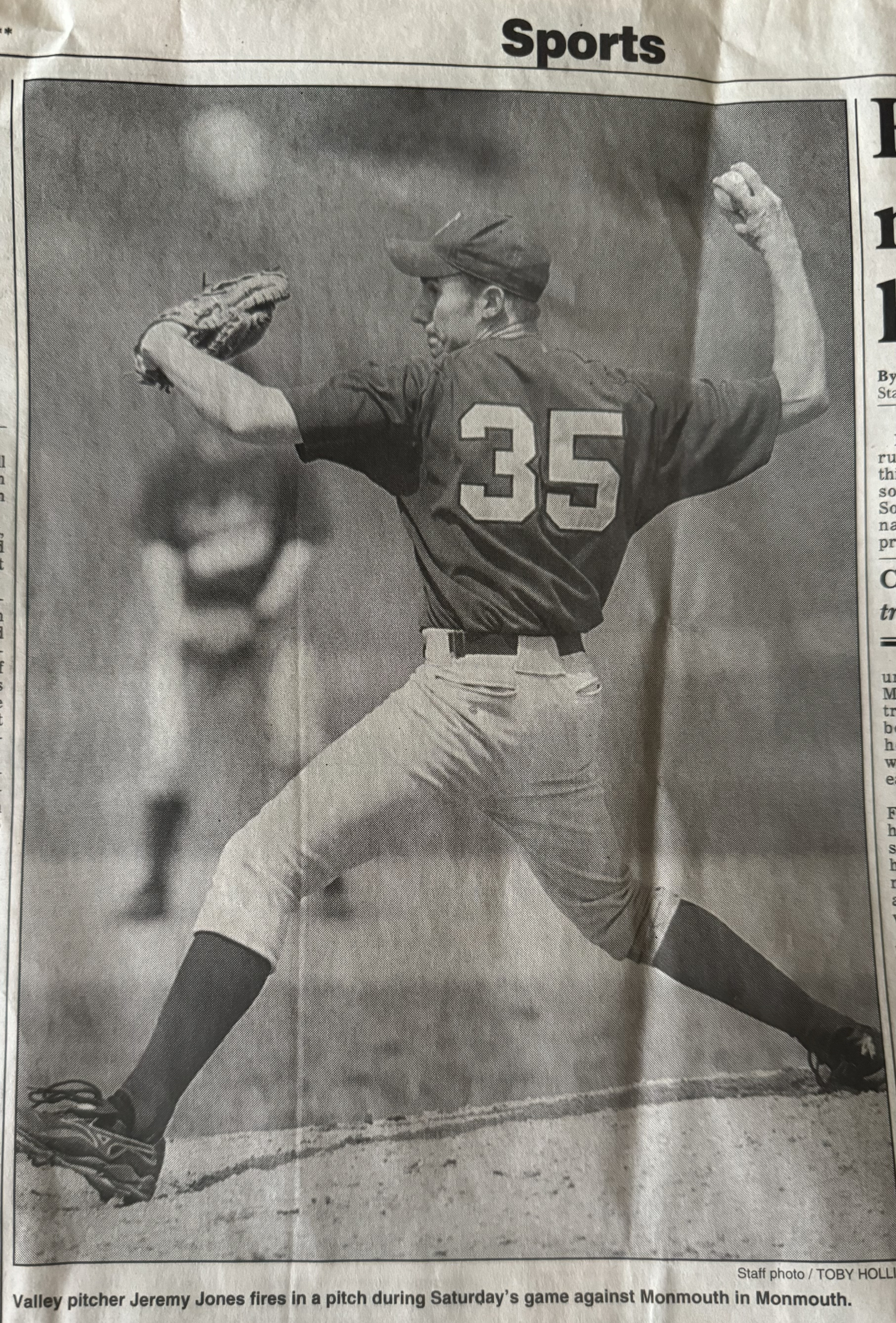
As a member of that championship-winning team, I could do no wrong. Grades weren’t a priority. As long as we were “good enough,” teachers pushed us through. Senior year, my buddies and I started drinking and partying. We were bulletproof. Even if we got caught, we weren’t reprimanded. The coaches weren’t going to kick us off the team. They knew better than to stop the locomotive.
After I graduated, instead of going to a smaller college to play baseball, I chose a school where I could party with my high school buddies. After my freshman year, my “Possession of Alcohol by a Minor” violations (2) were higher than my GPA (1.8). That’s where the locomotive stopped.
My grandmother was an alcoholic. My dad was an alcoholic. My uncle was, too. Still, I didn’t see it coming. But after my wife and I got pregnant with our first son, I found myself planning my drinking to accommodate the birth timeline.
If I start drinking now, I’ll be sober enough that when I’m in the delivery room, no one will know.
That’s when I thought I might have a problem.
After years of trying to “cut back,” life showed me the weight of my addiction. I saw the wreckage I’d caused in the lives of people I loved. I felt like I was suffocating.
“I’m going to quit,” I told my wife after we got pregnant with our second son. “I’m done.”
Except, instead of trying to fix the problem, I just started hiding it. I drank and drove home from work, stopping at different gas stations to cover my tracks. Every move was calculated. A few months later, after drinking my way through a night of Christmas shopping with my wife, she confronted me during dinner.
“Have you been drinking?” she asked.
I knew better than to lie. I was struggling just to stay awake at that point.
“Yup,” I said, bracing for impact.
But none came. She didn’t fight me. I’d expected her to blow up, but this time, she just looked at me. And I knew: the last person in my corner was finally done. In that moment, I was completely broken.
“I’m going to go to AA tomorrow,” I told her on the drive home.
I shook like a leaf as I walked into the meeting the next night. I was so scared that I sat down in the wrong direction and had to awkwardly shift my folding chair around to face the man right next to me, who was sharing that night. And as soon as he started talking, I broke down. He was telling my story.
When I look back at my story, I’m still in awe of God. The alcohol used to whisper to me, “I know what you’ve done. You can’t get through this without me.” But when I shared my story, it was like God lifted sandbags off my back. I had no idea the freedom I would experience.
After that first meeting, I met my eventual sponsor. “When you’re ready to start putting in the work,” he told me, “you need to figure out who your ‘higher power’ is. It can’t be me (‘What if I go out and drink tomorrow?’), and it can’t be you (‘How’s that been working out for you?’).”
After starting to dig into the Bible, I reached out to my mom, who was a believer. “What’s this Jesus stuff?” I asked. She explained the basics to me, and little by little, I started to believe. I started listening to Christian music. I started reading More Than a Carpenter by Josh McDowell, which my mom had also given me. Eventually, it clicked.
Six months into recovery, sitting in my office as my co-workers buzzed around me over the noise of the radio, I asked Jesus to come into my life...and everything went quiet. I don’t know if the radio cut out or what, but for a split second, it was just…silent. Complete stillness. The moment was fleeting, but it was so distinct that it was undeniable.
I didn’t push my wife to go on the same faith journey as me, but as she saw the change in my life, she also became a believer, and we started going to church together. I’d been reading the Bible on my own, but I needed a nudge to go deeper. After visiting a church that wasn’t a good fit, a friend recommended Faith Church in Waterville. As soon as we walked through the doors, we knew we’d found what we’d been looking for. Every Sunday, the pastor read the Word of God from the pulpit, and it fed my hungry soul.
After getting plugged into the church, I approached our associate pastor, told him my story and asked how my experience might help others in the church. I couldn't help but think there were other people in the church who were hurting, just like I was. We had great, thriving small groups, but I wondered how deep they were going. Were people talking about the silent sins they didn’t want anyone to know?
“I don’t know what this looks like,” I told him. “I just know I’m feeling led to do this.”
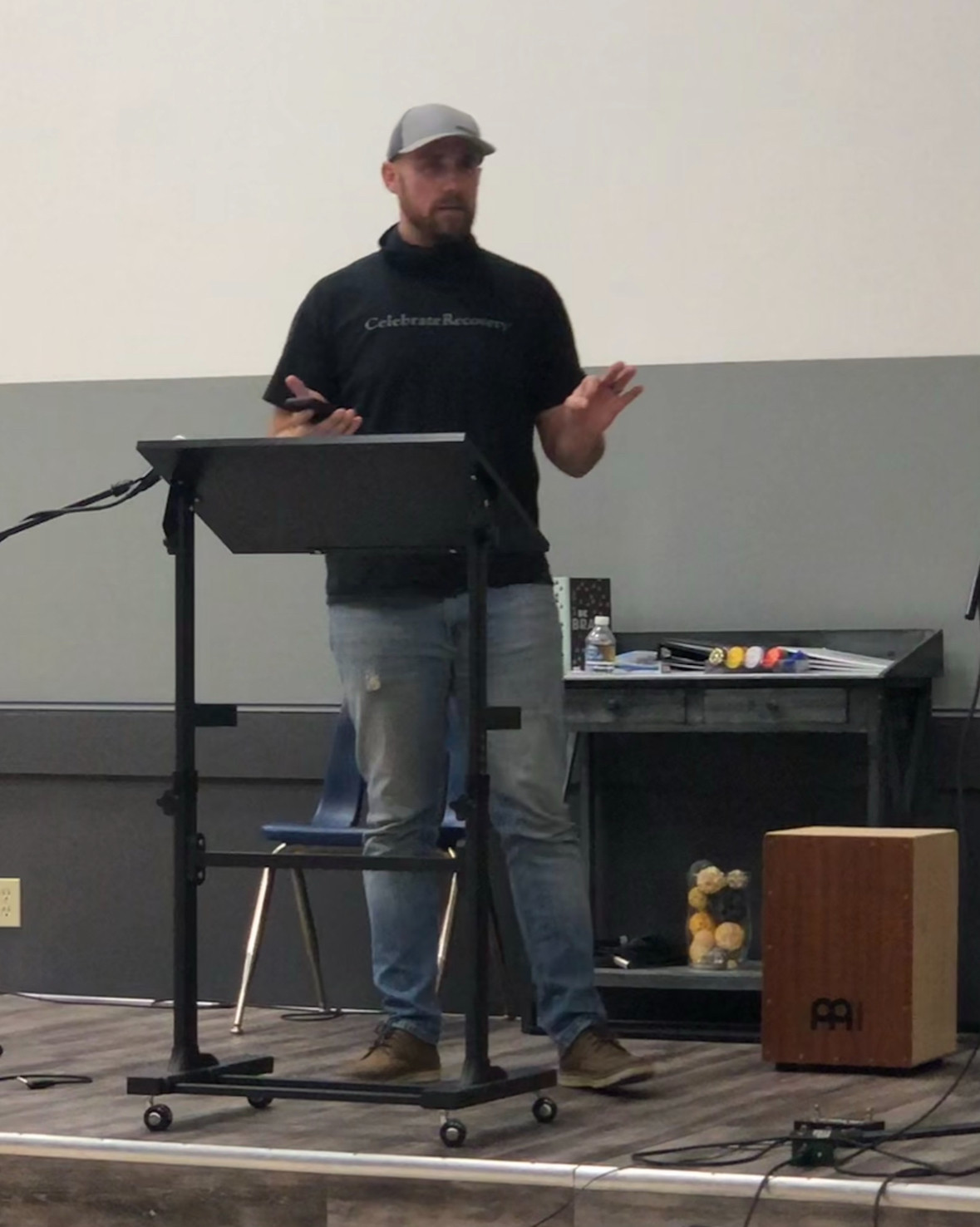
“We’ve been praying for someone to come forward,” he said.
Nine months later, we launched our Celebrate Recovery program—helping men and women find restoration from their hurts, habits and hang-ups—and it’s been going strong for six years.
When I look back at my story, I’m still in awe of God. The alcohol used to whisper to me, “I know what you’ve done. You can’t get through this without me.” But when I shared my story—everything I’ve done—with another person, it was like God lifted sandbags off my back. I had no idea the freedom I would experience. I didn’t have to hide anymore.
I’m so grateful God has used my brokenness to reach other people. That’s what gets me so excited when I talk to people who are struggling.
“You know that story you’re most afraid to share?” I tell them. “That’s where God is going to set you free.”
Starting somewhere
Three years into leading Celebrate Recovery, I felt God nudge me toward pastoral ministry. I told my senior pastor, and we found an online program that worked with my schedule. Three years after that, in January 2024, I earned my bachelor’s degree in biblical counseling and joined church staff as the outreach pastor.
A few months later, when Sam Huggard showed me and Brent the video of Crossover Bible Church, we had our outreach theme:
If our church were to close its doors today, never to open them again, would anyone in our community notice?
At that point, the honest answer was, “Probably not.” Our church was theologically sound, based in Scripture, with well-executed small groups, but we lacked focus outside the church. We hosted one-off events from time to time, but day-to-day gospel conversations weren’t a priority.
We changed our mindset as a church: We can’t just expect people to just come to us. We need to go to them.
Faith isn’t like Crossover or your typical community church. Our building is located right off the interstate (I-95), so we’re more of a destination church. Of our 300 people, only 30 actually live in Waterville. To reach our community, we needed to be intentional.
After Celebrate Recovery started to take off, the culture at Faith started to change. People saw God transforming lives—and not just inside the church, but outside of it, too. Given that—and the added effects of COVID and shrinking attendance—we changed our mindset as a church: We can’t just expect people to just come to us. We need to go to them.
When I started as outreach pastor, I knew my in-road into the community right away: youth sports. Like Pastor Philip in north Tulsa, all my natural connections came from the field. My kids played sports. I coached the junior high baseball team and currently coach the varsity baseball team. Parents and coaches were my mission field. I’d heard the stories of kids coming to sporting events—broken homes, broken families, hungry kids. I saw the opportunity for gospel impact.

From day one, I could’ve filled my weeks pursuing that angle, but I held back. I didn’t want to be a one-trick pony. That was too small, I thought, for our community to “notice.” I wanted to help the whole congregation get engaged in the whole of the community, so I put the sports on pause.
Initially, we looked for a property—one that would allow us to do community-focused events targeted to pockets of the community. We wanted a more permanent location in the community—to show we were there to stay—but that proved difficult, given the small geographic footprint of Waterville. We talked to school officials, city officials. We met with an outreach team. We looked at existing properties.
We started with the lowest-hanging fruit: the South End. It’s the oldest (and poorest) part of Waterville, and it shows—rundown buildings, single-family homes turned into three-unit apartments, absent landlords. After six months of partnering with the community there—walking the streets, neighborhood clean-ups, bus tours—we found a storefront in the South End. But God slammed that door shut.
Our passion is for the brokenness in our community. Right now, we’re showing up where we can. We’ll continue to build trust through proximity and presence, by showing up every day.
He had something different in mind. He showed me where I was going wrong—trying to find a route to community engagement for everybody in the congregation, instead of actually engaging the community. We just needed to start somewhere, so God brought me back to my roots: youth sports.
Of the 30,000 people in the Greater Waterville Area, 230 kids live in the South End. My kids go to the same schools, so we see what these kids are up against. We see the boundaries and hurdles they have to overcome. We see the real needs and the opportunity to leverage those needs for the sake of the gospel.
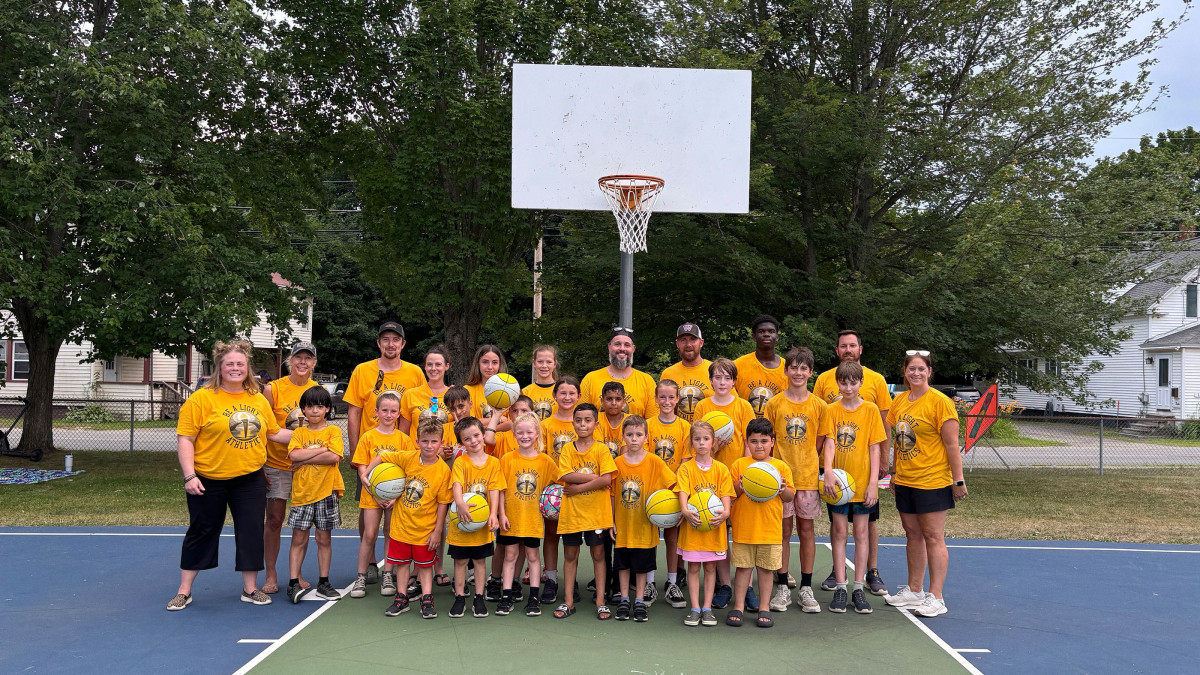
This summer, our plan is to host two week-long sports camps in the South End, using the outdoor courts and fields that already exist in the community. And as we take that step forward in faith, God has already brought people from the congregation out of the woodwork to help.
The thing I thought would hold us back is now what’s propelling us forward.
Looking forward to gospel transformation
Watching (and re-watching) the Crossover story reminds me: We can do this.
It will take time to shift our culture and focus beyond the four walls of our church, but we’re here for the long haul. Even if it looks different than we’d planned, even if it doesn’t solve all our problems with community engagement, God can use Faith Church to bring transformation to Waterville.
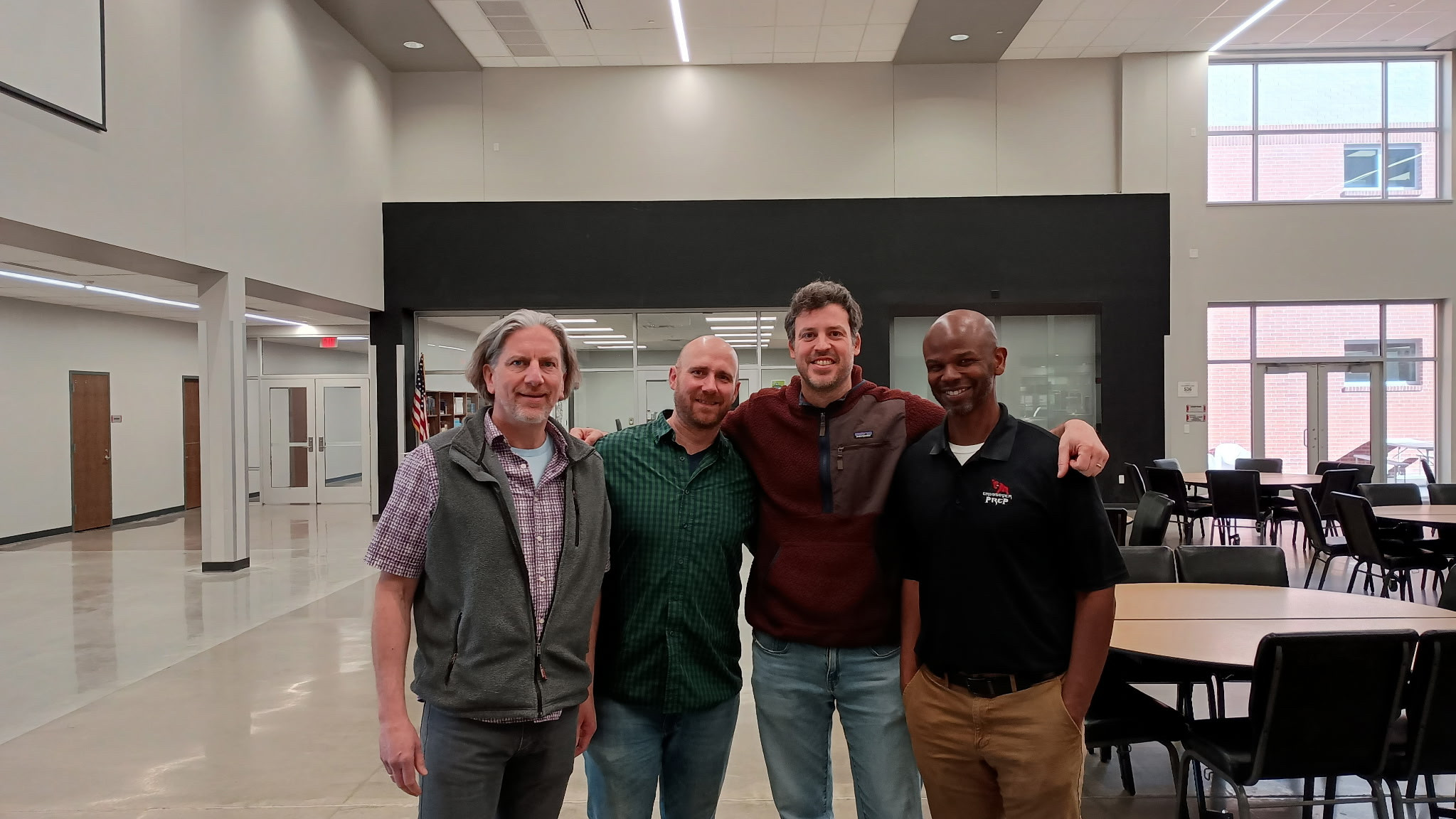
Our passion is for the brokenness in our community. Right now, we’re showing up where we can. We’ll continue to build trust through proximity and presence, by showing up every day. This summer, it’s youth sports. Like Crossover, we hope that by showing love to the kids, the parents will notice something different—that we’re not just showing up once, handing out popsicles and retreating to our big building off I-95. We’re here to stay. Through that, we hope to build relationships and watch God transform lives through the gospel.
Who knows what will come of it? Maybe we’ll find a facility. Maybe something will pop up as we continue to be present in the community. All I know is God has called me—and Faith Church—to bring the gospel to meet real needs of the real people in Waterville. And I know the gospel transforms lives of real people every day.
This article was written as a follow-up to Philip Abode's article, "Transformation Flows Through Relationships."
Both articles were included in the 2025 edition of The Movement, the EFCA's annual publication highlighting stories of God at work within the Evangelical Free Church America. To view and order copies of The Movement for your congregation, click here.
Lead photo: Jeremy Jones (back row, third from right) and a team from Faith Church lead a summer basketball clinic in Waterville, Maine, in July 2025.
Send a Response
Share your thoughts with the author.