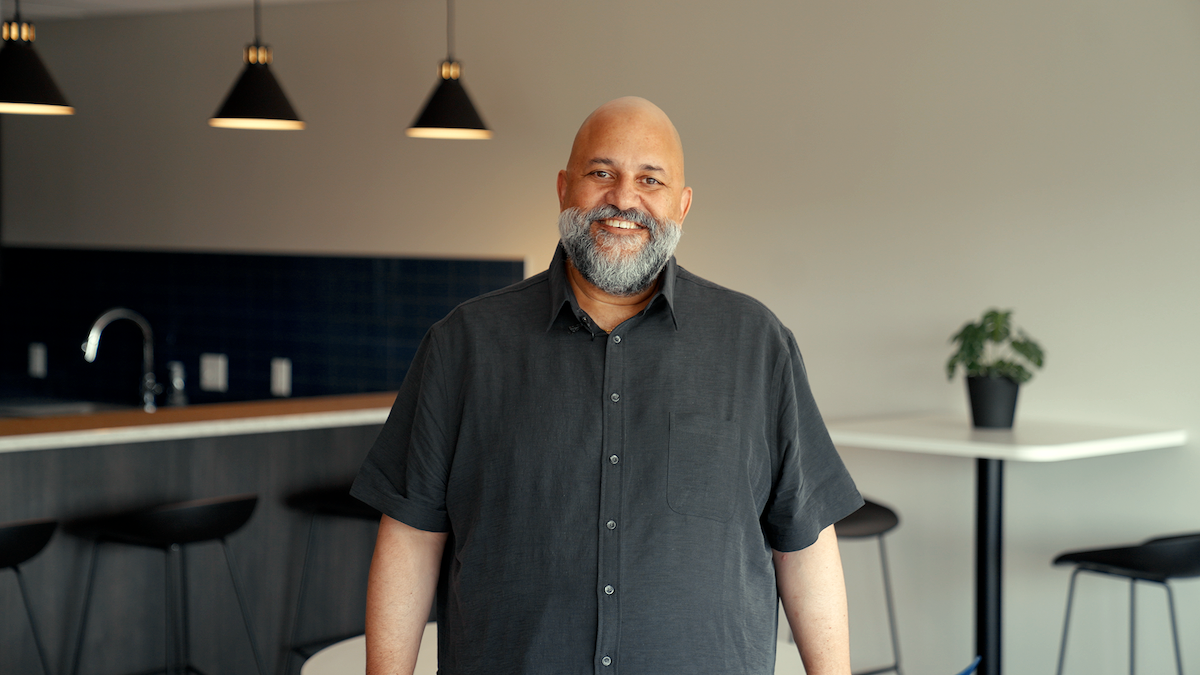
Jason Gupta: Missions Is About God’s Goodness
Humans of the EFCA with Jason Gupta, EFCA executive vice president of international ministries.
I grew up overseas as a missionary kid but ended up back in the States as an engineer in Colorado Springs. At some point, I realized that ministry was much more important to me than engineering. Just months after I got married, I resigned from my engineering job to attend Dallas Theological Seminary. While there, I was also a pastor and preparing to be a church planter.
The first seminary class I signed up for was on missions—not because it was my heartbeat, but because I thought it would be easy. I thought, “I've been a missionary kid. I've even taught on missions. I know about this.” Turns out, it was not an easy class. It challenged my whole perspective. It shifted my thinking from missions being primarily driven by the needs of the world to being drawn into the overwhelming goodness of God and His purposes. He wants us to join Him in what He cares about. Missions became much more God-centric for me. That was a paradigm shift.
It challenged my whole perspective. It shifted my thinking from missions being primarily driven by the needs of the world to being drawn into the overwhelming goodness of God and His purposes.
I still wasn’t planning to go into missions, but during my senior year, things began to change. Through mentors, trusted friends and my church, God led me to reconsider my plan, so my wife and I took a weekend away to seek God's direction. We decided to see how God could use us in missions.
Some wise advisors asked me, “Where do you think God could use your gifts the most?” We started looking into theological education in an intercultural context. We wanted to find a place where there were still needs to which we could contribute, so I took a trip with my professor to eastern and central Europe. I journaled—which I don't typically do—took extensive video and came back to process it all with my wife. We took another weekend away to understand where God was leading us. It didn't take long. We were quickly pulled toward Ukraine.
Within a few months, I was ordained, graduated from seminary, accepted by a mission and preparing to head to Ukraine. In 2005, we moved to Kyiv to help train Ukrainians to be a part of the Great Commission. I had the opportunity to mentor young people in a local church, and they asked me to help them start a missions ministry. I also led the missions department at Kyiv Theological Seminary.
We had deep relationships in Ukraine. We were part of a Ukrainian church for years. We watched the youth group teenagers become the church leaders after the war began. Two of them were the daughters of our pastor. One was a leader of the missions ministry at the church, and the other, Anna, became my assistant at the seminary.
When we returned to Ukraine in 2023, I was feeling sorry for myself and guilty about having left. I was honestly afraid to go back because I thought they'd be disappointed in me. I tried to apologize to them at a church picnic, but they turned it around and encouraged me. They told me stories about my former students—where they were, what they were doing, the impact they were making—but they also told me about themselves.
Anna told me how—when she first came to work as my assistant—she didn't care about missions. She just needed a job and had the administrative skills I needed. We worked together for years. A few months ago, when the previous dean at the seminary was called to the front lines of the war, the new dean decided to cancel the missions class that I taught in the fall for graduating seniors. It was seminary's only mandatory missions class.
I realized my work there mattered. At the very least, these two lives were dramatically changed, and now they're having an ongoing impact.
Anna went into the dean's office and asked, “Why are you canceling this class?” He said, “The country is at war. We're not thinking about sending people anywhere else. Why do we need to teach about missions?”
She said, “If you think that, you don't understand what missions is.”
As she was telling me this story, I heard my own words coming out of her mouth. What she explained to the dean was what I'd been lecturing on for years.
“Okay,” the dean said to Anna. “You can have the class, but who's going to teach it? Jason's not here.”
Anna thought for just a second and said, “I'll teach it.”
The dean agreed. Anna recruited her sister, and the two of them taught the class together.
That was so encouraging because I realized my work there mattered. At the very least, these two lives were dramatically changed, and now they're having an ongoing impact.
Send a Response
Share your thoughts with the author.