John M. Perkins Taught Me How to Love My Neighbor
An EFCA pastor remembers the man that showed him the power of relational discipleship.
On Friday, March 13, I was alone in my study when I saw the news that John M. Perkins had passed away. I sat still for a few seconds and then prepared to get back to work. He was 95, I told myself. That’s a good, long life. But then I sat longer, and tears filled my eyes. On and off this went throughout the weekend.
John Perkins is my hero. But as tears continued to fill my eyes over and over again, I realized that I was not crying for a hero. I was crying because I lost a friend.
John Perkins is my hero because...he showed me that people experiencing poverty need more than charitable handouts and far-off lectures on self-reliance.
John Perkins is my hero because through his words—spoken and written—he showed me that people experiencing poverty need more than charitable handouts and far-off lectures on self-reliance. When I was 19, I heard him speak in person for the first time. One line from that event sums up much of the philosophy of ministry for the church I would plant a decade later: “If you’re going to feed people, eat with them.”
When I was 22, my wife and I relocated to North Minneapolis. It was only a month or so after we moved that John Perkins came into the neighborhood to speak at an event. After the event, we walked up to him and talked for a minute. He gave me his number and asked me to call him.
I want to talk with you
It took a couple of years before I called him. I didn’t want to waste his time. I nervously called because I needed advice. He didn’t answer.
Then I got a voicemail that said something like this: “This is John Perkins. Please call me back, because I would really like to talk with you.”
John Perkins wants to talk with me? I called him back, and we stayed on the phone for more than an hour.
I don’t know if John Perkins took time to talk with me because he heard about my dream of planting a church in my neighborhood. I think he might have taken time for me simply because he loved talking with people.
The best way to influence people is to love them. Not to fake love them. Not to simply smile and nod while you wait for them to be done talking. John Perkins loved people by turning his ear toward them and giving back to them the best of his words.
When you are with a person, ask God to lead your mind to understand that you are standing before one of His image-bearers. When you realize the dignity of every human being, you will be set free to show genuine love.
What do you think?
On two occasions, my wife and I were fortunate enough to be part of a group that got to spend several days learning from John Perkins. A few of us were standing in a circle, talking after one of his lectures. He asked us for feedback.
John Perkins never seemed to be interested in being some sort of far-off celebrity guru. He treated me as his equal because he knew with all his heart that I was his equal.
You have been doing this work since before I was born, I thought, and you want to know what I think?
He never came across like he thought he was better than me. John Perkins never seemed to be interested in being some sort of far-off celebrity guru. He treated me as his equal because he knew with all his heart that I was his equal.
John Perkins was a civil rights leader, a church planter, a preacher and the visionary behind the Christian Community Development movement. And yet, every time I got to talk with him, I felt like I was the most important person in the world.
I know a thousand other people felt the same way. That's where real influence comes from.
Self is addictive
I learned from John Perkins that 15 years is about the minimum that you can put into a work like ours. I knew I wanted to do this work for a long time, so one day, I called him to ask one question: "How do you not lose a passion for making disciples and loving your neighbors?"
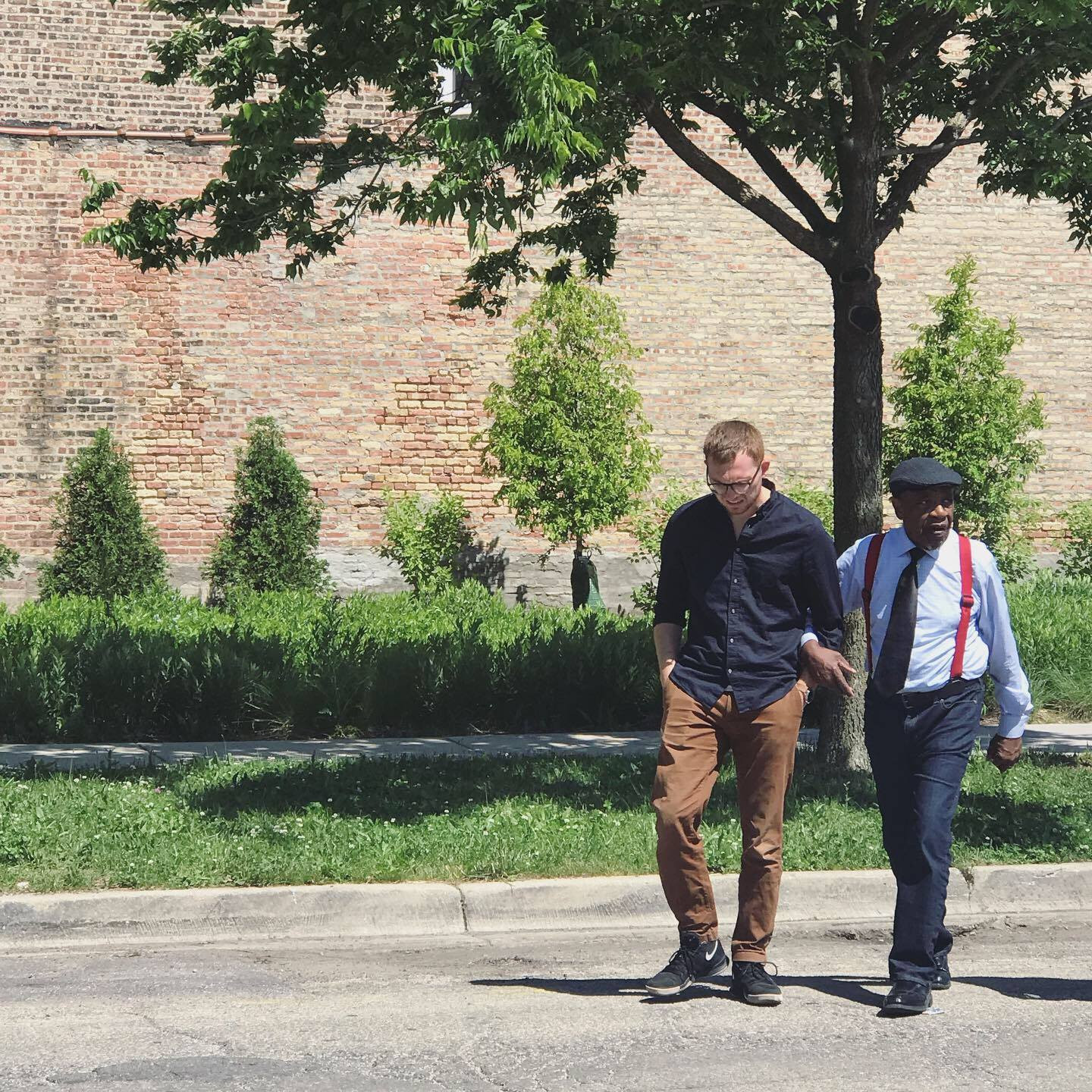
During our conversation, he shared four habits with me:
- Devotional in the morning (praying, reading the Scriptures)
- Eating with others in your community
- Suffering with those in your community
- Confessing sin to one another
When he realized I was trying to take his words and create some kind of systematic list, he said simply, "Think about others. Self is addictive."
This conversation was more than a year before the official launch of our church. I had no idea how relevant this word would be, six years later. On many days, I have felt tired. Not the kind of tired that is fixed by a nap, but the kind of tired that is self-sulking. The “why me?” kind of tired.
The more I look inward, the more tired I feel. But when I look upward to my God and look outward into my neighbor’s eyes, I sense a strength for ministry that only comes through self-forgetfulness.
Healing words
Before becoming a pastor, I did not realize how many hurtful words I would receive in the process. In the first four years, the most common criticism was our pace of growth. I led this church plant in the patient method that I learned from John Perkins. In the inner city, you can handout food to thousands of people in a day, but making disciples and seeking people’s wholistic development takes years. This is a nice idea on paper. But when someone joins a church plant, they usually want to see things start happening to prove that you are not wasting their time.
Fifteen months after we began gathering for weekly worship, I called John Perkins to wish him a happy 92nd birthday. I got to tell him how the church was going. At the time, we probably had 20 people gathering on a typical Sunday. Do you know what John Perkins told me that day?
"You're on the right track," he said. "Don't go too fast."
In a world filled with hurtful words, I was fortunate enough to receive encouraging words from my hero.
A life worthy of imitation
On the morning of John Perkins’ funeral, I sat alone in a hotel lobby trying to summarize his life in 2,000 words. I wanted to give a better introduction, so people could have a sense of who he was and why his philosophy of ministry gripped me from a young age and continues to influence me today.
I loved John Perkins because he lived a life worthy of imitation. He was not only a preacher, but he was also a man who would spend hours in relational discipleship.
I couldn’t do it. On the way to his funeral, I told my wife about my struggle to summarize his 95 years of life. I told her that other publications have already put out better summaries, and John Perkins wrote so much that people would be better just reading his own words than reading my words about him.
When I told my wife my struggle, she gently said, “You don’t have to write a biography about him. Just tell people why you loved him.”
So here it is: I loved John Perkins because he lived a life worthy of imitation. He was not only a preacher, but he was also a man who would spend hours in relational discipleship. He was just as excited to exhort a person over the phone as he was to preach on a stage in front of thousands.
He was not only a civil rights leader. He was a man who shared a hotel room with his brother in ministry every time he traveled, because no human relationship was more important than the one he shared with his wife of 74 years. He did not limit his focus to private righteousness or public justice. He spoke boldly in public about justice and lived faithfully as a husband and a father in private.
I loved John Perkins because he loved me every time we interacted. He loved me by listening to me, thinking with me and encouraging me.
He showed me that in a world obsessed with platform building, there is nothing greater than to love the neighbor God has put in front of you.
Additional resources:
- Let Justice Roll Down by John M. Perkins
- Beyond Charity: The Call to Christian Community Development by John M. Perkins
- Dr. John Perkins on "Miles Walked and a Lived History" (2018 EFCA Theology Conference)
- Dr. John Perkins on "Love and the Struggle We Must Win" (2018 EFCA Theology Conference)
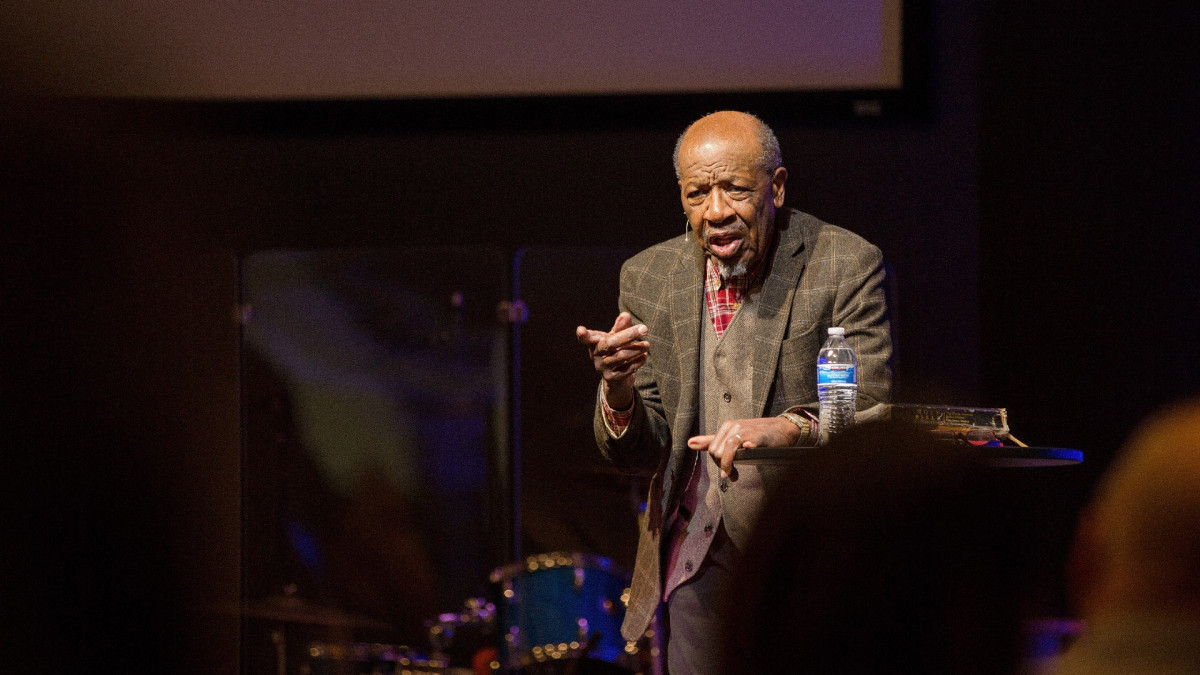
Lead photo: Dr. John Perkins speaks at the 2018 EFCA Theology Conference on the theme, "The Gospel, Compassion and Justice, and the EFCA.”
Send a Response
Share your thoughts with the author.