When the Gospel Meets Art
In Paris, I learned how artistic expression could be a powerful doorway into people’s lives.
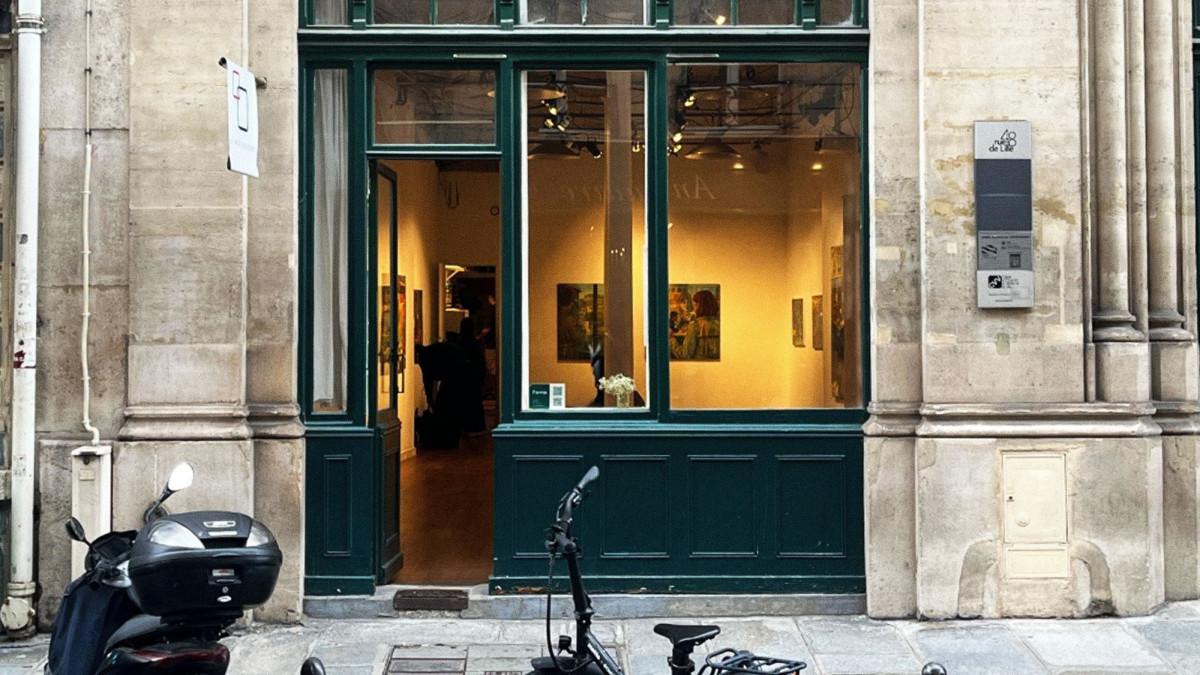
On the edge of the 6th Arrondissement in Paris, France, just steps away from the famous Musee d'Orsay, lies a small gallery with a deep green facade. Upon its walls hang beautiful tableaux (paintings) that stand as a testament to years spent honing one's craft, expressing deep longings and asking questions that are often too difficult to voice aloud.
For nearly 20 years, this small gallery has been a meeting place for artists across the city. What began as the dream of a few local artists gradually grew into a respected establishment within the Parisian arts community. It is here that I have the privilege of doing ministry—investing in and exploring these longings and questions alongside the artists whose work hangs on these walls.
When you step through the gallery doors, you are greeted by the faint scent of oil paint and lacquer still drying on canvas. The once-plain white walls now burst with color, each piece sparking thoughts and wonder. Every composition carries a story from the life of its creator. One painting offers a glimpse into childhood while another quietly remembers a long-lost friend.
As you move slowly around the room, you begin to know a person you have never met. You see what brings them to tears and what makes them laugh, what angers them and what brings them joy. You begin to understand what they believe and where their hope lies. All this happens without a single word. Yet somehow, you know them; you feel what they have felt, hope for what they have hoped and ache for what has hurt them.
When you step through the gallery doors, you are greeted by the faint scent of oil paint and lacquer still drying on canvas. The once-plain white walls now burst with color, each piece sparking thoughts and wonder. Every composition carries a story from the life of its creator. One painting offers a glimpse into childhood while another quietly remembers a long-lost friend.
The simplicity of arts ministry
Few cities in the world carry the same artistic history and prestige as Paris. From Pablo Picasso to Claude Monet, the legacy of great art runs deep within the city's veins. Due to this history, artists from every corner of the world travel to the City of Lights hoping to absorb inspiration from the masters who walked its streets before them. They arrive with stories they long to tell—about their own lives and about the lives of those they love. They mark canvas with scars and carve stone until a memory stands before them. Songs are sung with heartbreak, and joy spreads upon faces as dancers glide across the floor. Every artist carries stories, longings and hopes within them, and each one is searching to be heard, seen and understood.
Paris is a beautiful and challenging place for artists to pursue a career. In a creative landscape this vast, it is easy to feel lost. Thousands of artists compete for limited recognition and space, hoping their work will one day matter to someone. Yet despite the difficulty, they continue to create and share their work with the world. With such a swath of incredible art available to admire, it’s easy to forget that behind every canvas and performance is a person longing to be understood, seen and valued––for more than just what they’ve brought into existence.
At its core, arts ministry is simple: seeing, hearing and truly knowing the artists behind the music, dance, paintings, sculptures, books, films, plays, food and countless other forms of art we encounter every day. Though this may sound simple at first, it is soon revealed much deeper work than that as you invest in intentional moments of collaboration, mutually sharing in artistic vulnerability. It is here where relationships begin to form, and ministry naturally unfolds. This means not pushing too hastily for an opportunity to share the gospel by word, but instead first showing them the gospel through choosing to show up to the concerts, exhibitions and performances, thus stepping into each other's creative worlds and building trust.
This form of relational ministry is built on the gift of presence. In both the highs and the lows of an artist’s journey, celebrating with them when they step off stage or open a show, and staying close when they don’t get the role or fail to make a sale. Being present in these moments is important as the act of creating is deeply vulnerable, and the emotional highs and lows of an artist’s life are often heightened and intensified in ways that are difficult to explain.
Being present in these moments is important as the act of creating is deeply vulnerable, and the emotional highs and lows of an artist’s life are often heightened and intensified in ways that are difficult to explain.
To be present in those spaces is to be invited into something personal and fragile. It is in the smaller moments: sharing a meal during rehearsals, talking after hanging an exhibition or dreaming together about a future collaboration. It is in the slow, everyday rhythm of being present in their world, caring about what they care about and recognizing the weight they carry as they work tirelessly to bring something beautiful into the world. Showing up for the non-glamourous parts of artistic living. These moments––and these relationships––are where arts ministry begins to take place and where the gospel is experienced and not simply told.
God invites you to create
In Genesis, God invites humanity into the work of creation. In Genesis 2:19, God asks Adam to name the animals. From the beginning, God has welcomed humanity into the act of shaping and naming the world around them. Artists simply continue to accept that invitation; they create because something inside them demands expression. Some emotions are not easily spoken, and some questions refuse to be silent. Art then becomes the place where those feelings and questions finally emerge. For many artists, the act of creating feels sacred. It is a moment where something invisible becomes visible, where something deeply personal is offered to the world. Though a majority of artists are not Christians, they are still deeply spiritual people chasing a creative force inside that they have not yet realized is from God.
For many, their work wrestles with life's deepest questions. In gallery spaces, rehearsal studios and late-night conversations, artists speak openly about beauty, suffering, identity and purpose. From these conversations, their art becomes a window into the soul. In arts ministry, it’s an honor and privilege to be invited to peer through these windows and look deeply into the soul. Rather than arriving with quick answers, this type of ministry begins with listening and taking the time to understand the stories behind the work and the longings presented within—entering the spaces where these questions are already being discussed.
In gallery spaces, rehearsal studios and late-night conversations, artists speak openly about beauty, suffering, identity and purpose. From these conversations, their art becomes a window into the soul.
Over time, as you share in that creative world and practice your own art alongside them, something begins to shift. You are no longer an outsider at a distance, but someone welcomed into their internal conversations. You are given a seat at the table of their lives, because you stayed, listened and showed up consistently—showing those you have built relationships with that they can rely on you and that you truly care for them.
I have experienced this most clearly in songwriting sessions, where honest writing requires vulnerability. It’s a privilege to be invited into these rooms with different artists. Suddenly, I am not just someone with whom they’re collaborating, but rather I am given the opportunity to love them and care for them as they share their lives with me. People come into those sessions baring their souls, asking questions and saying the things that cannot simply be spoken aloud but must be expressed through song.
Those moments remind me of the weight and power that art carries in people’s lives. Artists carry their own emotions and the pain and stories of others in the creation process. Underneath it all is a longing to be seen, to be heard and to be helped. Loving artists, then, is about genuinely caring for them as people created in God’s image. It’s about being present in spaces where their questions, doubts and desires are expressed. As trust grows through friendship, deeper conversations emerge naturally.
In a city like Paris, this kind of presence matters. Many artists have little connection to the Church, and few have meaningful relationships with Christians. Yet artists are often very reflective people who care about truth, beauty and meaning. They long to see suffering healed and the world made whole. They wrestle with how to make sense of the brokenness and emptiness we all experience every day, and their art becomes the language through which those struggles are expressed.
This reciprocal vulnerability allows you not just to know but to be known. People begin to encounter the gospel not simply through words but through the way it shapes a life, a friendship and even the art itself.
As Christians, when we enter the spaces where these conversations are happening—galleries, studios, theaters or simply pausing to listen to a busker in the park—we begin to build a bridge between unreached creators who long unknowingly for their Creator. To do this, we need to invest deeply in friendships with the artist whom the Lord has gifted with the ability to capture the joys and sorrows of humanity. At times, this simply means showing up when life is difficult. At other times, this means disagreeing honestly and sharing truth out of love that may feel confronting. Through it all, you trust that God can use your presence and creativity to reflect His beauty.
Meeting people where they’re at
This kind of ministry is not new. In fact, the apostle Paul described a similar posture in 1 Corinthians 9:20-22 when he wrote, "To the Jews I became as a Jew, in order to win Jews. To those under the law I became as one under the law (though not being myself under the law) that I might win those under the law. To those outside the law I became as one outside the law (not being outside the law of God but under the law of Christ) that I might win those outside the law. To the weak I became weak, that I might win the weak. I have become all things to all people, that by all means I might save some."
In my work in Paris, I have sought to “become as one” by investing in and inhabiting the city’s artistic community, a place where the gospel is often not known. Through relationships formed around creativity, conversations about faith grow naturally over time. I’ve also found in my time here that it is important to share your own work, share pieces of yourself through creativity and not only consume the work of others. This reciprocal vulnerability allows you not just to know but to be known. People begin to encounter the gospel not simply through words but through the way it shapes a life, a friendship and even the art itself.
Arts ministry begins with the willingness to see the artist behind the art and to meet them in the places they occupy. Long before any of us arrive, God is already at work in the questions they are asking and the beauty they are striving to create. We are simply invited to walk alongside them as they search.
In many ways, I see this is not only a vision for arts ministry but a reminder for the whole Church. We often hope people will come to our services, events or communities before they encounter the gospel. Yet the example of Christ––and of Paul––is one of going to where people are. Whether through art, sports, workplaces, schools, cafés or neighborhoods, we are called to enter the worlds of others with humility, curiosity and love. When we do, we discover that God is already present and at work there. The task of mission is not to pull people into our world but to faithfully join them in theirs and point them toward Christ.
Send a Response
Share your thoughts with the author.